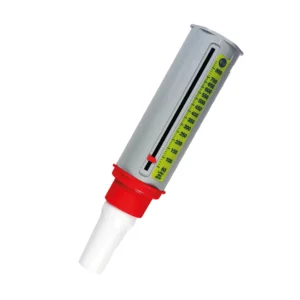
Monitoring your breathing with a peak flow meter can be a practical way to keep track of your lung function at home, detect early changes in your condition, and help guide treatment decisions. Peak flow measurement is especially useful for people with asthma, and it can also provide helpful insights for people with COPD (chronic obstructive pulmonary disease) or other airway‑related conditions. This blog post explains how to use a peak flow meter correctly, how many measurements to take, how often to take them, what the readings mean, how individual characteristics affect peak expiratory flow, and includes a helpful FAQ section. The information here is intended to educate and support people living with respiratory conditions.
What Is a Peak Flow Meter?
A peak flow meter is a simple, handheld device that measures the Peak Expiratory Flow Rate (PEFR) — the fastest speed you can blow air out of your lungs after a deep breath. Lower readings can signal airway narrowing or reduced lung function, even before you notice symptoms.
Peak flow is different from spirometry but can be a useful home monitoring tool to track changes over time.
How to Use a Peak Flow Meter (Step‑by‑Step)
To ensure accurate and consistent measurements, follow these standardized steps every time you use the meter:
-
Stand or Sit Up Straight – Keep your posture consistent each time you measure.
-
Reset the Marker – Slide the indicator to zero (or the lowest number on the scale).
-
Take a Deep Breath In – Fill your lungs completely.
-
Seal and Blow Hard – Place the mouthpiece in your mouth and close your lips tightly. Blow as hard and as fast as possible in a single breath, like you’re blowing out candles.
-
Record the Reading – Note the number next to the marker.
-
Repeat Three Times – Perform the entire process three times and record the highest of the three numbers — this is your peak flow for that session.
It’s essential to always use the same meter and technique so that your results are comparable over time.
How Often Should You Take Measurements?
-
To establish your personal best: measure peak flow twice a day (morning and evening) for 2–3 weeks while your condition is stable.
-
Once your personal best is known, you may continue daily measurements, especially if your symptoms change or according to your clinician’s instructions.
-
During periods of worsening symptoms or flare‑ups, you may take peak flow readings more frequently as directed by your healthcare provider.
Measuring at consistent times (e.g., upon waking and before bedtime) helps identify meaningful trends.
What Do Peak Flow Readings Tell You?
Peak flow readings are typically interpreted using your personal best — the highest reading you achieve when your condition is well controlled.
A zone system helps guide action:
-
Green Zone (80–100% of personal best):
Indicates good airway function and control. -
Yellow Zone (50–80% of personal best):
Suggests caution — airways may be narrowing and an adjustment in management may be necessary. -
Red Zone (<50% of personal best):
Signals a possible emergency or severe airflow restriction — immediate action and medical care may be needed.
Personal best values vary based on age, sex, height, and lung size; “normal” peak flow differs from one person to another. A healthcare provider can help determine your baseline.
Using Peak Flow in COPD and Other Conditions
Although peak flow monitoring is most commonly used in asthma, it can also help people with COPD or other respiratory diseases:
-
Peak flow may show changes in airway obstruction over time.
-
Consistent declines relative to personal best may signal worsening symptoms or need for treatment adjustment.
Devices are less commonly used as treatment guides in COPD compared with asthma, but they can still provide useful information when interpreted alongside clinical assessment.
Factors That Affect Peak Flow Readings
Peak flow values are not one‑size‑fits‑all. Several factors can influence your readings:
-
Age: Peak flow typically declines with age as lung elasticity decreases.
-
Height: Taller individuals generally have higher peak flows because of larger lung capacity.
-
Sex: Men often have higher peak flows than women due to larger average lung size.
-
Effort and technique: Inconsistent technique or submaximal effort leads to inaccurate readings.
-
Respiratory infections or flare‑ups: Fluctuations can reflect changes in airway inflammation or obstruction.
Understanding these influences supports accurate interpretation and helps avoid over‑reliance on a single reading.
Frequently Asked Questions (FAQ)
Q: Why do I take three blows but record the highest one?
A: Repeating the test three times ensures consistency and that the highest effort is recorded. The best value reflects your maximal airflow.
Q: Does a single low reading mean I’m having an attack?
A: Not necessarily. Isolated low readings should be confirmed with repeated tests and interpreted in context of symptoms and trends.
Q: Can peak flow be used instead of symptoms?
A: Peak flow is a helpful objective measure but should be used alongside symptom tracking and clinical guidance, not alone.
Q: Should children use a peak flow meter?
A: Many children, typically age 5 and older, can use a peak flow meter with training and may benefit from monitoring.
Q: How often should I recalibrate my personal best?
A: Personal best may change over time with growth, treatment changes, or disease progression. Re‑establishing personal best periodically is useful.
Takeaway:
A peak flow meter is a simple, objective tool to monitor airway function over time in asthma and other respiratory conditions. Proper technique, consistent measurements, and interpretation in relation to personal best — alongside symptom tracking and clinical guidance — allow you to detect changes early and act appropriately. Regular use as part of your care plan can help you maintain better respiratory health.
References
-
American Lung Association. How to use a peak flow meter and why it matters. Lung Association
-
Cleveland Clinic. Peak flow meter instructions and zones. Cleveland Clinic
-
Asthma Canada. Using a peak flow meter and interpreting results. Asthma Canada
-
Canadian Lung Association. Step‑by‑step peak flow meter technique. Canadian Lung Association
-
MedlinePlus. When to use peak flow and asthma action plans. MedlinePlus
-
StatPearls. Clinical significance of peak expiratory flow measurement. NCBI
-
Medical News Today. Peak flow meter and COPD usage. Medical News Today
Ayuda Health
The Ayuda Health app helps you align your drug and supplement reminders to existing daily habits, syncs with smartwatches, CGMs, blood pressure monitors, and smart scales to track all your vitals in one place. You can log your peak expiratory flow rates and symptoms in the e-diary. Ayuda also helps you make the most of your healthcare appointments. Through Yubi, your AI personal health assistant, you will receive additional support staying on track with medications and monitoring. Ayuda helps you simplifying care for multiple chronic diseases for yourself or someone you love.
Get started on your journey to better health with Ayuda. Download today.
Resources
American Lung Association – How to Use Your Peak Flow Meter (video)